Text: John 1:1-18
I
When the song of the angels is stilled,
when the star in the sky is gone,
when the kings and princes are home,
when the shepherds are back with their flocks,
the work of Christmas begins:
That’s the first half of a poem by Howard Thurman called The Work of Christmas. We’ll get to the second half in a little while.
It seems to fit this Sunday, because for most of the world Christmas is over. It’s New Years. The angels, stars, kings, and shepherds have all been packed away until next year. But the work of Christmas quickly becomes no more than the work that must always be done. Bills need to be paid, houses cleaned, cars fixed, classes taught, sales goals pursued, and so it goes.
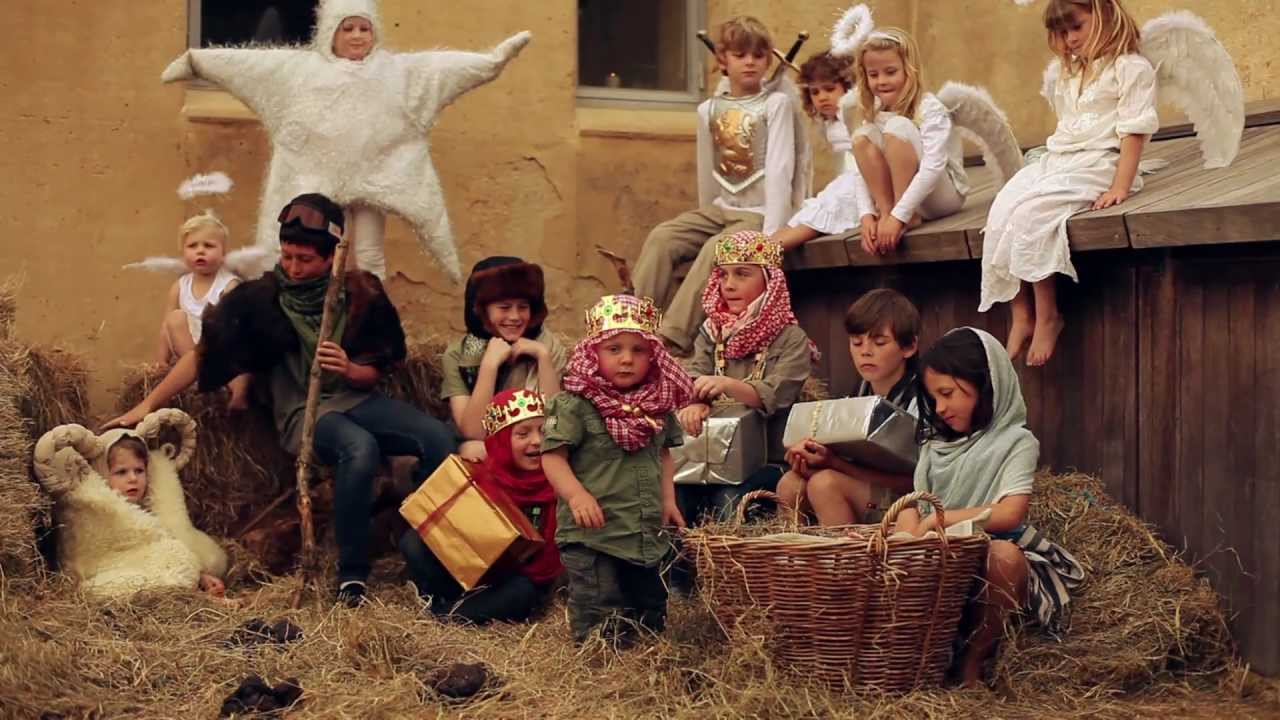
This poem seems to fit for another reason. In John’s Christmas story there are no angels, stars, kings or shepherds. No vulnerable, pregnant Mary, the mother of Jesus. No worried Joseph trying to find them a place to stay after a long journey to Bethlehem. How do you tell such an unsentimental, dry-eyed, Christmas story? If John was all we knew of the story of the birth of Jesus our children’s pageants would be reduced to a miniature version of John the Baptist dressed in a bear skin rug shouting, “I am the voice of one calling in desert, ‘Make straight the way for the Lord.’”
So John tells us an awesome – and unsentimental – story about a Christmas baby. Maybe there’s a reason. Perhaps he wants to call our attention to something other than a child in a manger on a starlit night.
II
According to John the story of the birth of Jesus can be told in two verses:
In the beginning was the Word, and the Word was with God, and the Word was God. (verse 1)
The Word became flesh and made his dwelling among us. We have seen his glory, the glory of the one and only, who came from the Father full of grace and truth. (verse 14)
All done. This is a masterful telling of the preexistent Christ, who takes on our flesh in the incarnation. It’s key to understanding a God who enters into every aspect of our experience so that we can live, love, and die in hope. It is the basis for saying that on the cross, in that sacrifice we call the atonement, Jesus dies as one of us for our sins and the sins of the world. It is because of the incarnation that we can look for signs of the presence of God in the creation and each other.
It’s big stuff. But that leaves us sixteen more verses. To say such grand things with such economy leaves room to say something more the gospel writer wants us to hear.
III
I believe the something more can be found in verse 12:
Yet to all who received him, to those who believed in his name, he gave the right to become children of God –
Why does John say so little about putting Jesus in a manger? So he can put us in it, instead. He says so little about Jesus’ birth, so he has plenty of room to talk about ours. Irenaeus, one of the fathers of the ancient church wrote many centuries ago:
The Word of God, Jesus Christ, on account of his great love for mankind, became what we are in order to make us what he is himself.
Jesus came not so there would be one child of God, but many. He came so we would not only sing “What Child Is This,” but ask, “Whose child are we?” He came so that we would not spend our lives dominated by others, or defined by our misfortunes, or distraught at the thought that we are alone in a world that has no purpose at all. He came so that we could know we belong to God in the most intimate sort of way.
Paul the Apostle says that coming to believe in Jesus is about more than receiving the forgiveness and righteousness of God. It is the experience of receiving the Holy Spirit of adoption (Romans 8:15).
The Spirit himself testifies with our spirit that we are God’s children. (vs. 16)
To know Jesus is not simply to believe something, but to become something. It is to have that sense that children have that we belong in ways that go beyond words. It is the freedom that comes from knowing that our days are in God’s hands. It is the confidence that comes from knowing no sin is the last word, no failure the summation of the value of our life.
IV
Now John says we have a role to play in this. Child of god, as good as it sounds, is a reality that requires our acceptance. You wonder why anybody would pass it up. But John, probably scratching his old, bald theological head, says we do it all the time.
Speaking of the people of Jesus day he says, “He came to that which was his own, but his own did not receive him.” Why would that be? Why would so many see child of God as an invitation impossible to accept? How can so many in our day sing songs of Jesus divine childhood and remain so unconscious of their own?
One writer has said we struggle to understand the difference between what describes us and what defines us. We speak of things like our race, nationality, childhood upbringing, financial success or failure, marital status (single-married-divorced), sexuality, education or the lack of it, past sins or triumphs – and often we speak as if these things define us. For better or worse nothing more important can really be said.
Now these things – good or bad – may all be true. But they only describe a part of us, they don’t define all of us. What does define us – if we are willing to give up our death grip on our inadequate definitions of our lives – is that we God’s children. Nothing – good or bad – cuts deeper than that. Nothing matters more. And nothing has the potential to be more transformational of the kind of person we will become. Paul, that once self-righteous Pharisee of Pharisees, understood so well how we cling to inadequate definitions of who we are and how important it is to let them go. He wrote:
You are all sons of God through faith in Christ Jesus, for all of you who were baptized into Christ have clothed yourselves with Christ. There is neither Jew nor Greek, slave nor free, male nor female, for you are all one in Christ Jesus. (Gal. 3:26-28)
I guess I’m sneaking in a plea for a Christmas conversion here. To be a child of God requires a decision to let go of other definitions of who we are. There can be a million true descriptions of who we are but only one true definition – we are God’s children, individuals who hold great worth in God’s eyes, were created to know love and respect, and will be used by God to do His work in the world.
V
This is the work of Christmas, according to John. In the light of the work of God becoming one of us, this is the first part of the work we are asked to do. So how are we going to do this? How are we going to live like children of God? It may seem like a dumb question – after all don’t most children simply get up in the morning and be who they are?
Yes. But most of us aren’t that secure as God’s child. We came into the family – like many adopted children – a little later. We need some convincing.
Here’s some help. For the rest of the month of January – when you get up in the morning and look in the mirror –say these words to yourself:
“I am God’s beloved child, created to know love and respect, and God will use me to do God’s work in changing the world.”
Let’s try it right now. It sounds easy. But most of us will not find it easy in the days to come. We’ll be tempted not to believe it. And we’ll doubt it because lots of other voices in our life will try to tell us it’s not true. They may sound something like this:
You, a child of God? But what about the failure of your marriage? What about that job you lost? What about when you disappointed your parents, children, or spouse? And don’t forget about all the poor judgments and mistakes you’ve made. Yeah, maybe God loves you, but you aren’t really worthy of that love, and you’re certainly not in a position to change yourself, not to mention the world.” (adapted from comments by David Lose)
Most of us will find plenty of reasons to doubt all if it. Which is why we need to remember the words in John’s gospel:
…to all who believe in his name he gave the right to become children of God – children not born of natural descent, nor of human decision, or of a husband’s will, but born of God. (vs. 13)
And nothing can change that.
VI
So the first work of Christmas is to become a child of God, a reality that is within the reach of every man and woman. To know whose we are, and because of that to know why we are.
And that bring us back to the last part of the poem with which we began:
When the song of the angels is stilled,
when the star in the sky is gone,
when the kings and princes are home,
when the shepherds are back with their flocks,
the work of Christmas begins:
to find the lost,
to heal the broken,
to feed the hungry,
to release the prisoner,
to rebuild the nations,
to bring peace among the people,
to make music in the heart.
When we know we are God’s child it makes sense to be about God’s business. It makes sense to live a Christmas life – not only one day a year when everybody is doing it – but all other days when everybody is not.
Children of God. It’s the work we were all put here to do.
 Michael W. Garrett